
Research

Over 50 million people worldwide were living with dementia in 2020, a number projected to reach 139 million by 2050. Yet most of what we know about Alzheimer's disease and Related Dementias comes from a narrow slice of the population, leaving entire communities underrepresented in the science meant to protect them.

Brain aging begins much earlier than most people realize. Alzheimer's disease can silently alter the brain through measurable changes in biomarkers like amyloid, tau, and inflammation decades before any symptom appears. Emerging conditions like long COVID further remind us that infections and immune responses can shape neurological health in ways we are only beginning to understand.

Our research investigates the biological, lifestyle, environmental, and social factors that influence brain aging and neurodegeneration across the lifespan, with particular attention to populations historically excluded from this field. By identifying early risk factors, understanding what shapes biomarkers, decoding disease mechanisms, and testing targeted interventions, we work toward a future where everyone, regardless of background, has the opportunity to age with a healthy mind and live their fullest life.

Watercolor illustration of a human brain in shades of orange, yellow, and red.
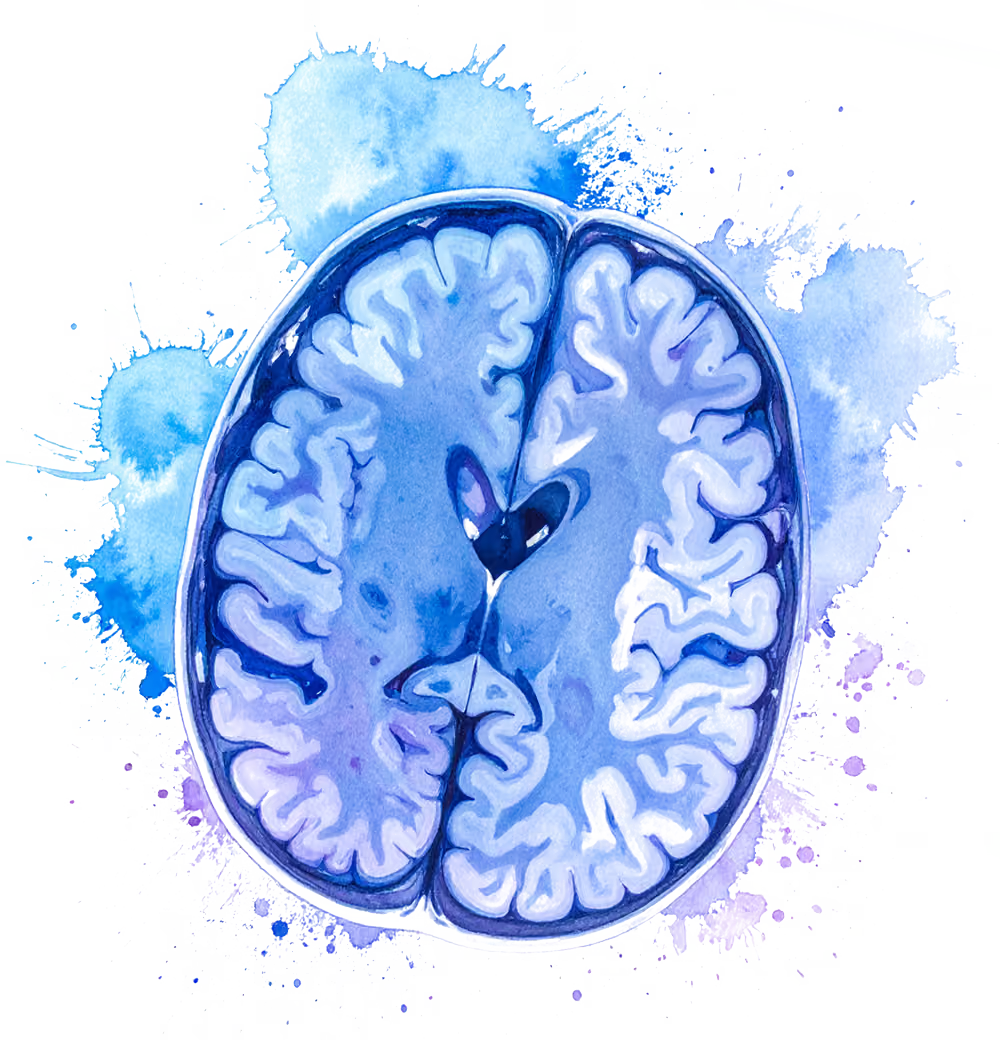
Watercolor illustration of a brain cross-section with blue and purple paint splashes.

Blood Biomarkers, Risk Factors, and Early Detection of Alzheimer's Disease and Related Dementias

We investigate how social, lifestyle, and biological factors, including stress, adversity, exercise, sleep, genetics, inflammation, and cardiometabolic health, influence blood-based Alzheimer’s biomarkers, cognitive decline, and brain aging. Understanding what drives variability in these biomarker levels is critical for realizing their potential as tools for early detection, for identifying who should be selected for clinical trials, and for tracking disease progression and treatment effectiveness. Using diverse longitudinal cohorts and combining plasma biomarkers with MRI, behavioral measures, and cognitive assessments, we aim to uncover early indicators of dementia risk, identify factors that accelerate or protect against cognitive decline, and strengthen the foundation for using blood-based testing in clinical practice.

Why it matters: Brain aging begins early, yet we still know little about what makes some people more vulnerable to dementia. By uncovering these early risk factors, we can develop strategies to support healthy brain aging and reduce the risk of dementia later in life.

Projects

A watercolor illustration of a human profile with the brain highlighted, symbolizing brain health, neuroscience, and cognitive function.

Traumatic Brain Injury and Biomarkers of Alzheimer’s Disease, Neurodegeneration, and Inflammation

How does a history of head injuries affect the aging brain? This project examines how lifetime traumatic brain injury influences brain aging in cognitively healthy adults, integrating blood-based biomarkers of neurodegeneration with neuroimaging and cognitive assessment.

An illustration of the social exposome showing how social and environmental factors across the lifespan influence brain health and dementia risk.

Social Exposome and Dementia Risk in Young to Middle Adulthood

Social and environmental conditions leave a biological imprint. We investigate how social determinants of health, including neighborhood deprivation, healthcare access and barriers, loneliness, and perceived discrimination, relate to blood biomarkers of Alzheimer's pathology, neurodegeneration, and inflammation, as well as to accelerated biological aging and allostatic load.

A watercolor silhouette of a human head with a tree-shaped brain, above figures representing growth and development across the lifespan.

Adverse Childhood Events and Cognitive Functioning Across the Lifespan

Early adversity can have lasting effects on the brain. We examine the relationship between adverse childhood experiences and cognitive functioning across a wide age range, from childhood through late adulthood, to understand how early life stress shapes long-term brain health.

Left arrow
Right arrow

Boosting NAD+ and Long-COVID Recovery with Nicotinamide Riboside

We conducted a clinical trial testing whether nicotinamide riboside (NR) can increase NAD+ levels and improve cognitive, neuropsychiatric, and physical symptoms in individuals with long COVID. Initial findings have been published in eClinicalMedicine here. We are conducting follow-up studies to explore whether boosting NAD+ improves Long COVID symptoms, including muscle strength, gait, and sleep and physical activity measured with wearables, as well as reducing inflammation and other markers of brain health.

Why it matters: Millions of people worldwide continue to experience long COVID symptoms, yet there are currently no effective treatments, and its pathophysiological mechanisms are poorly understood.
Watercolor illustration of a neuron with dendrites and axon in shades of blue and green.

Projects

A stylized white brain outline over vibrant watercolor splashes in red, green, teal, blue, and yellow on a white background.

The Effect of Nicotinamide Riboside on NAD+ and Physical Activity in Long COVID

NAD+ is essential for cellular energy and repair, and levels decline in illness. We analyze wearable device data to examine whether boosting NAD+ with nicotinamide riboside improves physical activity and gait in people with long COVID.

A stylized white brain outline over vibrant watercolor splashes in red, green, teal, blue, and yellow on a white background.

The Effect of Nicotinamide Riboside on NAD+ and Cognition and Long COVID Symptom Recovery

We investigated whether boosting NAD+ with nicotinamide riboside supplementation improves cognitive functioning, fatigue, sleep quality, and mood in people with long COVID, addressing some of the condition's most debilitating symptoms.

Left arrow
Right arrow
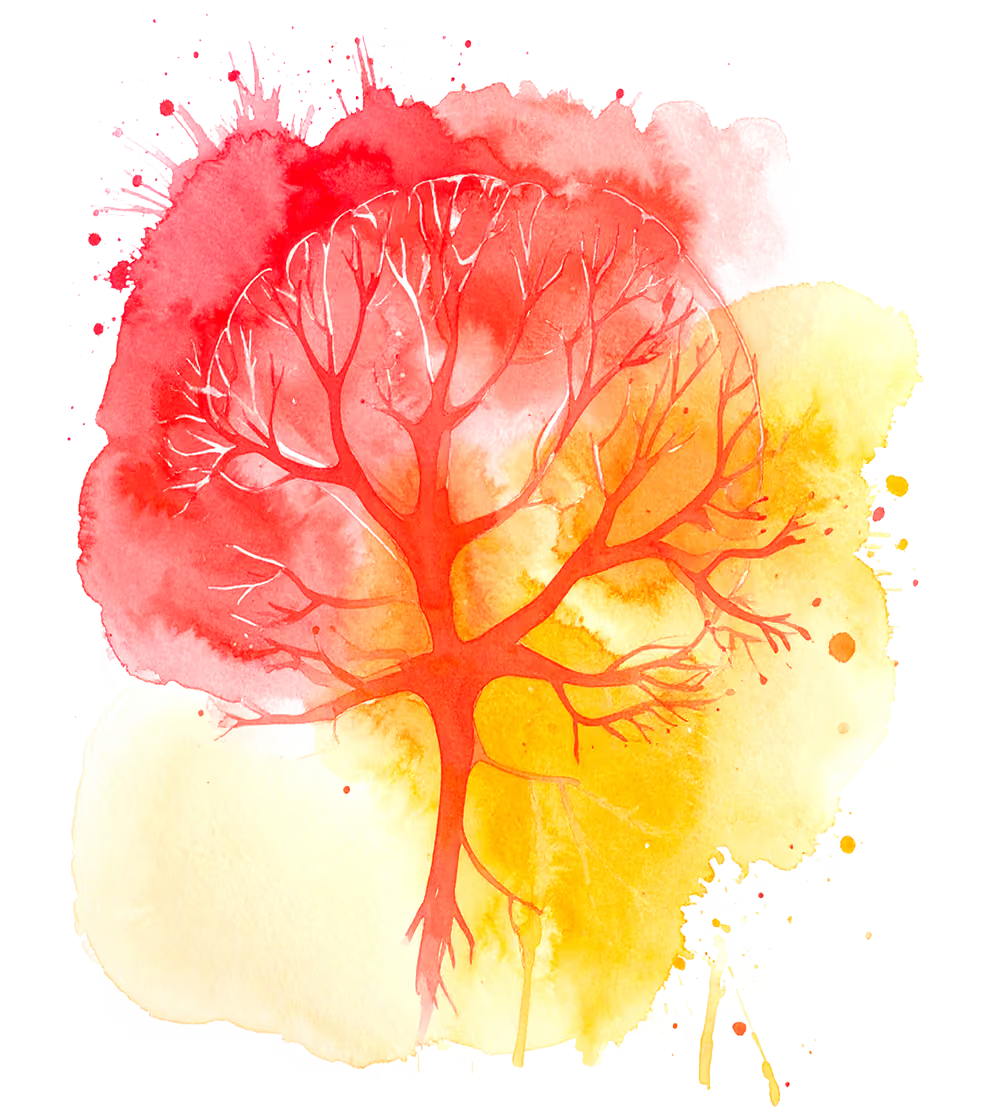
Watercolor painting of a tree with red branches and a background of red and yellow splashes.

Characterizing Long COVID Neurological Symptoms and Its Mechanisms

These studies investigate how neural injury, inflammation, and immune responses contribute to neurological symptoms in long COVID. By combining comprehensive cognitive and neurological assessments with advanced immune profiling, including adaptive immunity and autoimmunity, we aim to identify biomarkers that predict recovery and clarify underlying mechanisms. We also measure MRI-based brain changes to examine how long COVID affects the brain and relate to persistent symptoms.

Why it matters: Understanding the neuro-immune landscape of long COVID can aid in developing predictive models for prognosis and recovery, guide the identification of interventions to reduce persistent neurological symptoms and improve recovery, and significantly advance our broader understanding of the potential effects of viral infection on neuro-immune functioning and brain health.

Projects

A stylized white brain outline over vibrant watercolor splashes in red, green, teal, blue, and yellow on a white background.

Sleep in Long COVID

Sleep disruption is among the most common long COVID complaints. We assessed both subjective sleep quality and objective sleep efficiency using wearable devices to characterize the nature and severity of sleep impairment in this population.

A stylized white brain outline over vibrant watercolor splashes in red, green, teal, blue, and yellow on a white background.

Neuro-Immune Mechanisms and Biomarkers

We investigate markers of neural injury and peripheral inflammation in long COVID, and whether specific immune signatures, including adaptive immune responses to SARS-CoV-2, predict who developed persistent neurological symptoms.

A stylized white brain outline over vibrant watercolor splashes in red, green, teal, blue, and yellow on a white background.

Cognition and Daily Functioning

Long COVID can affect the ability to think clearly and perform at work. We examine cognitive functioning and long COVID symptom burden, and how together they affect people's capacity to work and carry out daily activities.

Left arrow
Right arrow

Collaborators

Support

Our research has been made possible thanks to the support of the following funding organizations. Interested in supporting our research? Contact us.
Alzheimer's Association logo
National Institute on Aging (NIH) logo
Niagen Bioscience logo
Massachusetts General Hospital McCance Center for Brain Health logo
Massachusetts General Hospital Executive Committee on Research logo
Ornate iron gate with lantern above stairs framed by autumn trees and a historic brick building behind.

Join Our Studies

Learn More